
Lab winter retreat
December 22, 2017
After a busy year, and a successful QQR for the HGU, we retreated to a chilly North Berwick to do science, beer and roaring fires.
After a busy year, and a successful QQR for the HGU, we retreated to a chilly North Berwick to do science, beer and roaring fires.
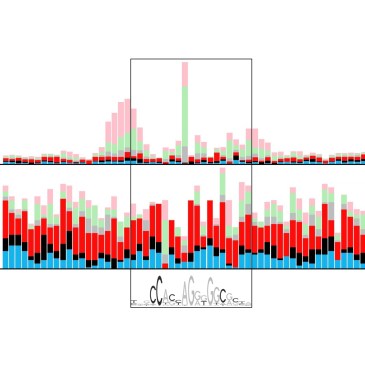
We still know relatively little about the evolution of gene regulation in cancer. Vera’s study (Kaiser et al, 2016, PLOS Genet) is one of the biggest so far (~1500 tumour whole genomes) and shows that there are remarkably high mutation rates and rapid evolution at most (putatively) functional regulatory sites, and she sees this across many cancer types. Particularly striking contrasts are seen between functional (upper graph) and control (lower graph) CTCF binding sites. However these patterns seem to be adequately explained simply by ‘blind’ mutational bias (ie neutral evolution), rather than active selection for particular alterations to regulation.
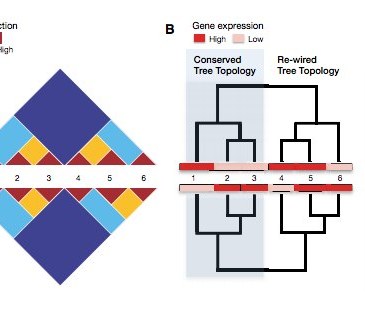
Collaborative work with the groups of Ana Pombo, Josee Dostie and Mario Nicodemi finally sees the light of day (Fraser et al, 2015). Using matched chromatin conformation (Hi-C) and expression (CAGE) data across neural differentiation we were able to relate the dynamics of gene expression to changes in chromatin domain organisation. The results suggest that previously known (TAD) domains on the level of ~1Mb congregate within larger multi-megabase (meta-TAD) structures, to produce a hierarchical tree of interactions up to the level of entire chromosomes. Alterations in the arrangement of branches on these trees over time influence gene expression changes.
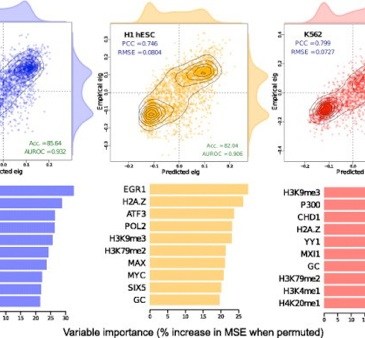
Ben’s magnum opus appears (Moore et al, 2015): the first study to successfully model higher order (multimegabase scale) chromatin structures in terms of lower (kilobase or lower scale) chromatin features. Comparisons of models between human cell types reveal interesting contrasts, but common features at chromatin domain boundaries.
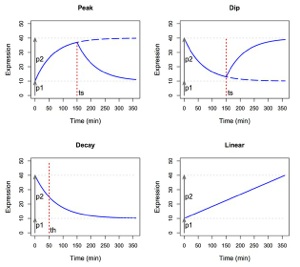
Stuart’s developed a clever new approach to time series data (Aitken et al, 2015), fitting expression profiles over time to a series of archetypical models or ‘kinetic signatures’. Unlike the dominant forms of analysis (clustering, differential expression between time points) this allows us to detect profiles of interest even if the profile of interest is entirely unique or involves lowly expressed transcripts. That turns out to be particularly handy when studying ncRNA dynamics.
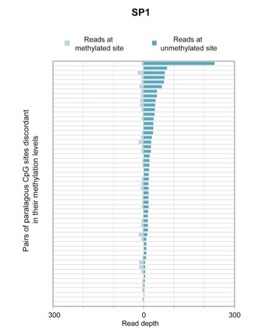
James’ interesting survey of where and when (and even how) duplicated regions diverge in terms of their chromatin structure appears in Genome Biology and Evolution (Prendergast et al, 2014). I realise nobody wants to hear scientists moaning about the peer review process (yet again). But jeez – this paper went through several journals over the course of ~18 months – and is more or less unchanged as a result. Someone needs to at least try to find an alternative for the stodgy, inefficient process we’ve ended up with. Maybe this is it?
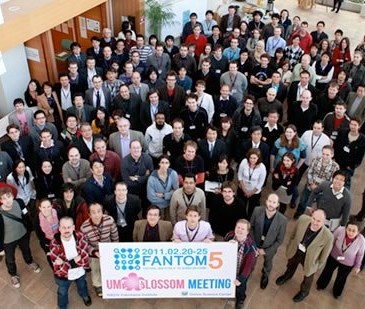
The FANTOM5 Consortium publishes an atlas of transcriptional activity covering 975 human and 399 mouse samples, including primary cells, tissues and cancer cell lines (FANTOM Consortium, 2014). Better still, the data were generated using single-molecule sequencing, avoiding the biases introduced by other approaches. As ever it was great fun to be involved in this unique international collaboration. All data are freely available from the FANTOM5 site.
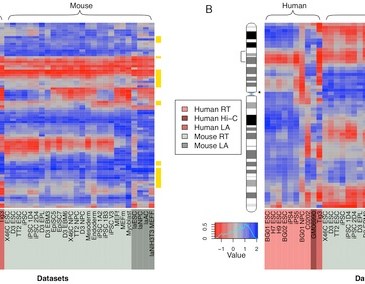
Emily Chambers’ study of higher order chromatin structure is published in PLOS Comp Biol (Chambers et al, 2013). For the first time this manuscript describes the regions of the mammalian genome that appear to have diverged at the level of their chromatin structure, rather than at the level of the DNA sequence. Intriguingly some of the regions involved contain genes involved in the development of the mammalian body plan in embryogenesis.

Our lab has been elected to this FP7 European Community-funded Network of Excellence. The goals of Epigenesys is to encourage collaboration and understanding between the fields of epigenetics and computational systems biology, and also to communicate the science to the wider public.

James’ mammoth study (Prendergast et al, 2012) of human chromatin variation is published; it involved remapping 1.3 billion sequencing reads. He shows that it is possible to find variable sites in the human genome (SNPs) where the different variants (alleles) present carry different chromatin structures. These sites seem to be surprisingly rare in embryonic stem cells, but there is evidence that they affect gene expression and are associated with human disease.

