Selection on nucleosome positioning in the human genome

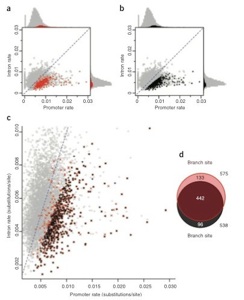
James’ impressive analysis of human evolutionary divergence patterns finally appears online as an epub at Genome Research (Prendergast and Semple, 2011). For the first time these data suggest that selection has acted relatively recently (since divergence from chimpanzee) across many regions of the human genome to alter the physical landscape, the chromatin structure, present. This also implies that the chromatin structures seen at many locations, often far away from known genes, affect critical cellular functions and have played important roles in the origin of our species.

An atlas of mouse development

We contributed preliminary analyses to the publication (Diez-Roux et al, 2011) of the freely accessible Eurexpress digital transcriptome atlas (http://www.eurexpress.org), of the E14.5 mouse embryo. Over 15,000 genes were annotated for hundreds of anatomical structures and regions, down to (almost) cellular level, allowing the identification of tissue-specific and tissue-overlapping gene networks. We illustrated the value of the Eurexpress atlas by finding novel coexpressed clusters of genes active in particular structures such as the developing eye.

Network inference from high throughput expression data

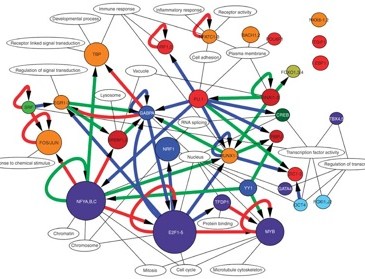
Suzuki et al (2009) examine the genome-wide dynamics of promoter usage in a human leukemia cell line, using high throughput sequencing of RNA over a time course of growth arrest and differentiation. Many key transcription regulators and their target genes were identified and validated by systematic siRNA knockdown. The results emphasise the enormous and daunting complexity of networks maintaining cellular states.

Opinionated

Myself and Martin Taylor (2009) are invited to write an opinion piece for Science on recent discoveries in chromatin structure and genomic sequence evolution.

Loops matter

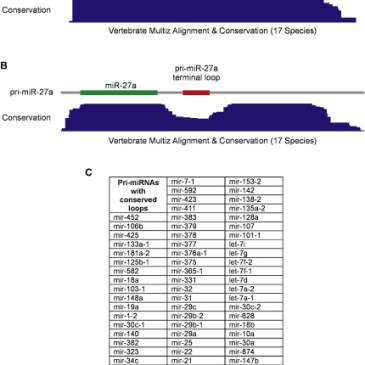
Michlewski et al (2008) show that many miRNA loop regions have been well conserved during vertebrate evolution, and have unanticipated roles in miRNA processing and regulation.

Promoter evolution across mammals

Taylor et al (2006) perform the largest study to date of evolutionary rates in mammalian promoters, allowing detailed comparisons between different promoter classes for the first time. This is also the first demonstration of the unusually accelerated sequence evolution within primate promoters.

An atlas of mammalian promoter anatomy

Carninci et al (2005): one of the first large CAGE sequencing studies, discovering several hundred thousand transcription start sites (TSSs) in the mouse and human genomes. The datasets allowed quantitative analysis of promoter usage in different tissues and showed that differentially regulated alternative TSSs for the same gene are common across the genome.